Checklist: how to evaluate a neighborhood before buying an apartment
Practical checklist to evaluate a neighborhood: shops, transport, noise, environment and surroundings. Use before buying an apartment.
Checklist: how to evaluate a neighborhood before buying an apartment
Buying an apartment is not only about layout and condition. What matters more is the area you’ll live in every day. You can renovate an apartment — you can’t change the neighborhood.
Instead of relying on intuition, use a structured checklist. It helps you quickly evaluate a location in real-life terms, not just photos.
1. Infrastructure
This defines daily comfort.
Check on the map:
- supermarket within 5–10 minutes walk
- small local shops nearby
- 2–3 pharmacies within 10–15 minutes
- pickup points (InPost, DPD, etc.)
- essential services
Additionally:
- gas station nearby
- post office
If you need a car for everything — it will annoy you daily.
2. Transport & accessibility
Distance ≠ time.
Test:
- route to work
- morning time
- evening time
Watch for:
- bridges
- major junctions
- traffic-heavy roads
15–20 minutes difference becomes hours weekly.
3. Noise
Underrated before buying, critical after.
Check in person:
- stand for 5–10 minutes
- listen
- observe traffic
Noise sources:
- major roads
- railways
- construction
- bars
- industrial zones
Also:
- hospitals, police, fire stations → sirens
4. Surroundings
You can read a lot in minutes.
Check:
- cleanliness
- building condition
- trash placement
- street activity
Trash under windows = bad. Clean and lively = good.
5. Green areas
Affects quality of life.
Check:
- park nearby
- walkability
- open space
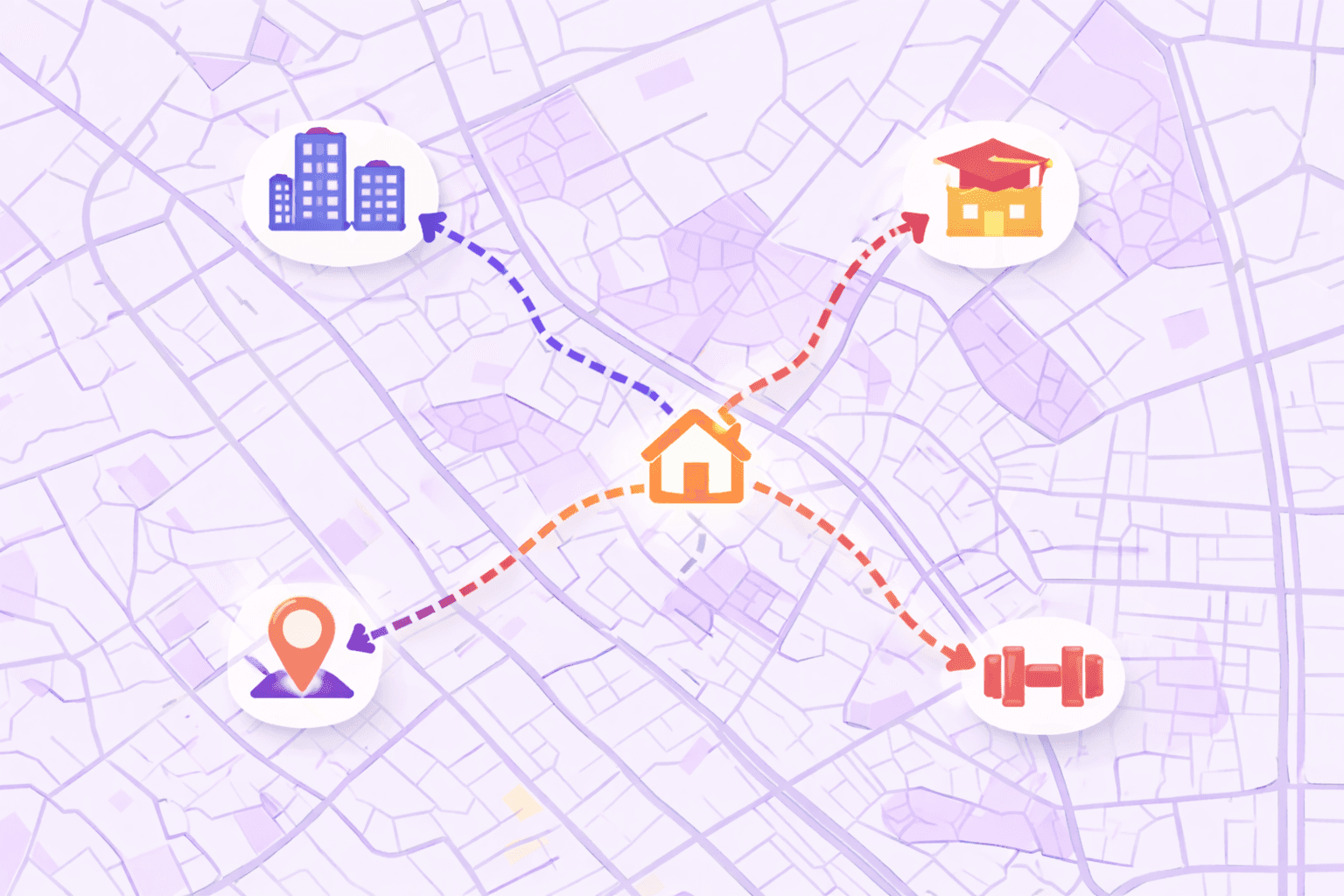
6. Time to key places
Define:
- work
- school
- malls
- stations / airport
Check real travel time.
7. Different times of day
Visit:
- daytime
- evening
One visit isn’t enough.
8. Personal scenario
If you have kids
Check:
- playgrounds
- safety
- schools
- activities
If you have pets
Check:
- walking areas
- dog parks
- sidewalks
- vet nearby (20–30 min max)
Sport & activity
Check:
- gyms
- sports facilities
- running / cycling areas
Daily habits
Check:
- cafes
- shops
- specific services
Comfort = what you actually use.
Quick checklist
INFRASTRUCTURE:
- ☐ supermarket
- ☐ local shops
- ☐ pharmacies
- ☐ pickup points
TRANSPORT:
- ☐ good commute
- ☐ no heavy traffic
NOISE:
- ☐ acceptable level
SURROUNDINGS:
- ☐ clean
- ☐ maintained
GREEN AREAS:
- ☐ park
LOGISTICS:
- ☐ good access
KIDS:
- ☐ playgrounds
- ☐ schools
PETS:
- ☐ walking space
- ☐ vet
SPORT:
- ☐ gym
LIFESTYLE:
- ☐ relevant places
Conclusion
A good neighborhood is a set of real-life factors, not taste.
How to simplify
Manual checks work, but tools can evaluate and compare areas much faster.