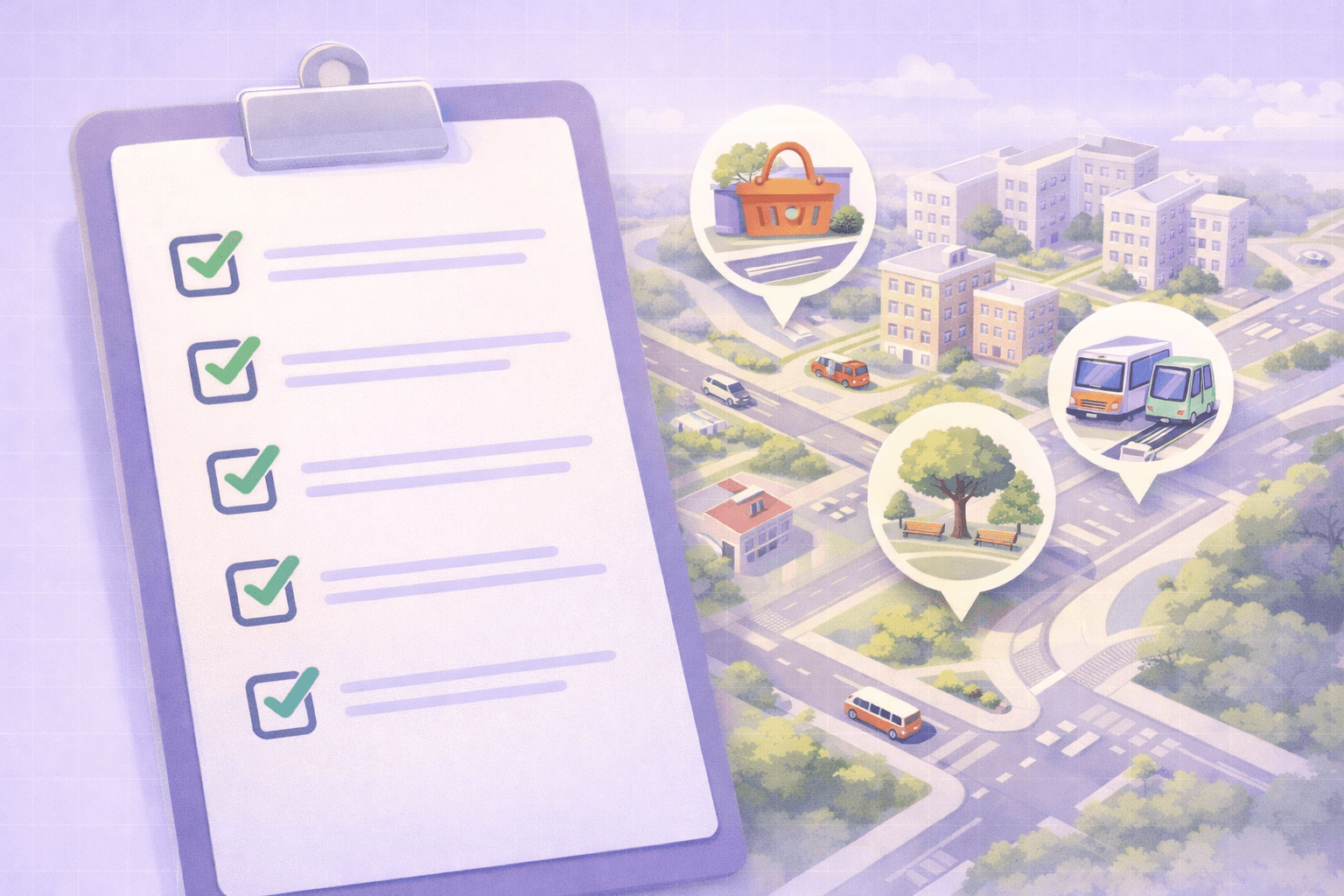
Why It Matters to Choose a Neighborhood Close to Work and School
Why living close to work and school affects not only convenience, but also quality of life, health, and daily stress.
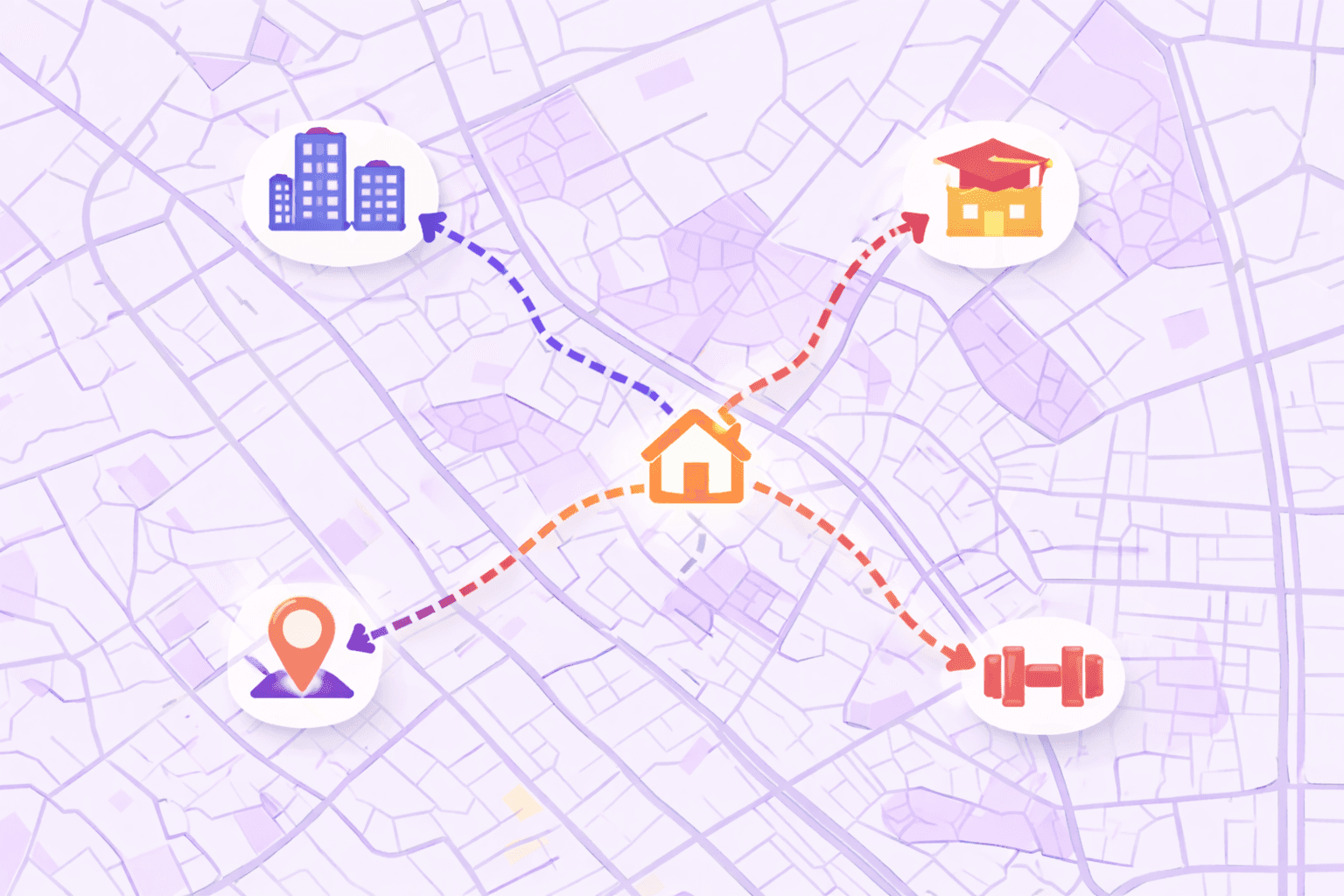
Why It Matters to Choose a Neighborhood Close to Work and School
When people choose an apartment, they usually focus on price, size, and the condition of the interior. That makes sense because those things are easy to compare. But one of the most expensive factors is often left out of the decision entirely: daily travel time.
At first, an extra 20 or 30 minutes may not seem like a big deal. In real life, though, this is exactly the kind of detail that shapes the quality of your day. A neighborhood that is far from work or school can seem like a reasonable compromise at the beginning. Later, it turns out that this compromise has to be paid for every single day with time, energy, and peace of mind.
Travel time is also part of the cost of a home
A weak location rarely looks expensive at the moment of purchase. On the contrary, it often seems more attractive: the apartment may be cheaper, the building may be newer, and the offer may look better on paper.
But if you spend too much time commuting every day, that “saving” quickly stops feeling like a good decision. Many people in Poland already have dense schedules. Once a long trip to work and back is added on top, there is much less room left for ordinary life.
That is why a neighborhood should be judged not only by the apartment price, but also by how much time it will take away from you every week.
Time losses build up faster than people expect
The worst part of a long commute is how quietly it turns into a major loss.
An extra 30 minutes each way already means about an hour a day. That becomes around 5 hours a week, about 20 hours a month, and more than 10 full days a year.
And that time almost never comes from nowhere. It usually comes out of sleep, rest, exercise, time with family, walking, hobbies, or learning. In other words, a bad location does not just take minutes. It takes away part of a normal life.
That is why an inconvenient neighborhood can seem cheap only at the beginning. Later, you keep paying for it every day.
A long commute affects more than tiredness
There is another important point that is easy to underestimate. Travel time is not only about physical fatigue. It is also about your sense of control over your own life.
When a large part of the day is spent commuting, people usually start to feel worse about their time in general. The day feels more compressed. After work, it becomes harder to exercise, cook, learn something new, spend calm time with family, or simply rest without feeling that the evening is already gone.
That is why a good neighborhood is not just a matter of convenience on a map. It is also a real way to protect a part of your life after work instead of giving it away to traffic and transport.
For families, school matters just as much as work
If a family has a child, the location becomes even more important. Then it is not only about getting to work, but also about getting to school.
In practice, this affects not only daily logistics, but the rhythm of the whole family. When school is close, mornings become easier, the day becomes more predictable, and the burden on parents is lower. When school is far away, there is more rushing, more extra trips, more dependence on the car, and more stress in everyday situations.
That is why a neighborhood close to school is not a small convenience. It is one of the key elements of everyday comfort.
A nearby school helps not only parents, but children too
There is also another advantage that people often forget. When school is closer and the area is easier to walk through, children are much more likely to get there on foot, by bike, or by scooter.
This matters not only because it is easier. It is also a real part of their everyday physical activity. In other words, a good location helps a child move more without requiring some separate special effort. It becomes part of normal daily life.
That is why a nearby and convenient school is not just about logistics. It is also about building a healthier routine.
A good neighborhood reduces unavoidable daily routes
This is one of the main ideas.
A good neighborhood is not just a pretty place that looks nice in the evening. It is a place that reduces the number of difficult daily routes built into ordinary life. The closer work, school, and everyday essentials are, the less time gets burned on routine logistics.
And the less time gets lost in that hidden way, the more space remains for a normal life: rest, family, health, exercise, learning, and peace of mind.
Why people underestimate this factor
The problem is that during a purchase, people naturally focus on what they can see immediately. Size is clear. Renovation is clear. Price is clear. But the future tiredness caused by a long commute usually becomes visible only after months of living there.
That is why many people underestimate a neighborhood that is inconveniently located. During a viewing, it may seem fine. On paper, everything may also look acceptable. But later, it becomes obvious that what you chose was not just an apartment, but a daily life pattern that will repeat for years.
And if that pattern is inconvenient, it can damage quality of life much more than expected.
The main takeaway
Choosing a neighborhood close to work and school matters for much more than convenience. It is one of the most underestimated quality-of-life factors when buying a home.
A good location does not just save time. It reduces daily stress, makes life more manageable, and leaves more energy for family, rest, health, and the things that actually matter. A weak location can quietly take away hours of your life for years.
That is why, when choosing an apartment, it is worth looking not only at the property itself, but also at how much time that location will cost you every single day.