How to Check a Neighborhood Before Buying an Apartment
Learn how to evaluate a neighborhood before buying an apartment: infrastructure, transport, noise, and green areas. A practical guide to choosing the right location.

How to Check a Neighborhood Before Buying an Apartment
When buying an apartment, most people focus on the apartment itself: layout, renovation, price.
The neighborhood is often judged “by feel” — like it / don’t like it.
And this is one of the most common mistakes.
Because you can change the apartment. The neighborhood — almost never.
What Can Be Changed and What Cannot
Before going into specific factors, it’s important to understand one simple thing:
- noise can be partially reduced (windows, insulation)
- renovations can be redone
- the layout can sometimes be adjusted
But:
- you cannot create infrastructure around the building
- transport won’t suddenly appear
- a store 30 minutes away on foot won’t become closer
That’s why, when choosing a location, it makes sense to first focus on what cannot be changed.
Infrastructure — The Foundation of Daily Life
This is one of the most underestimated factors.
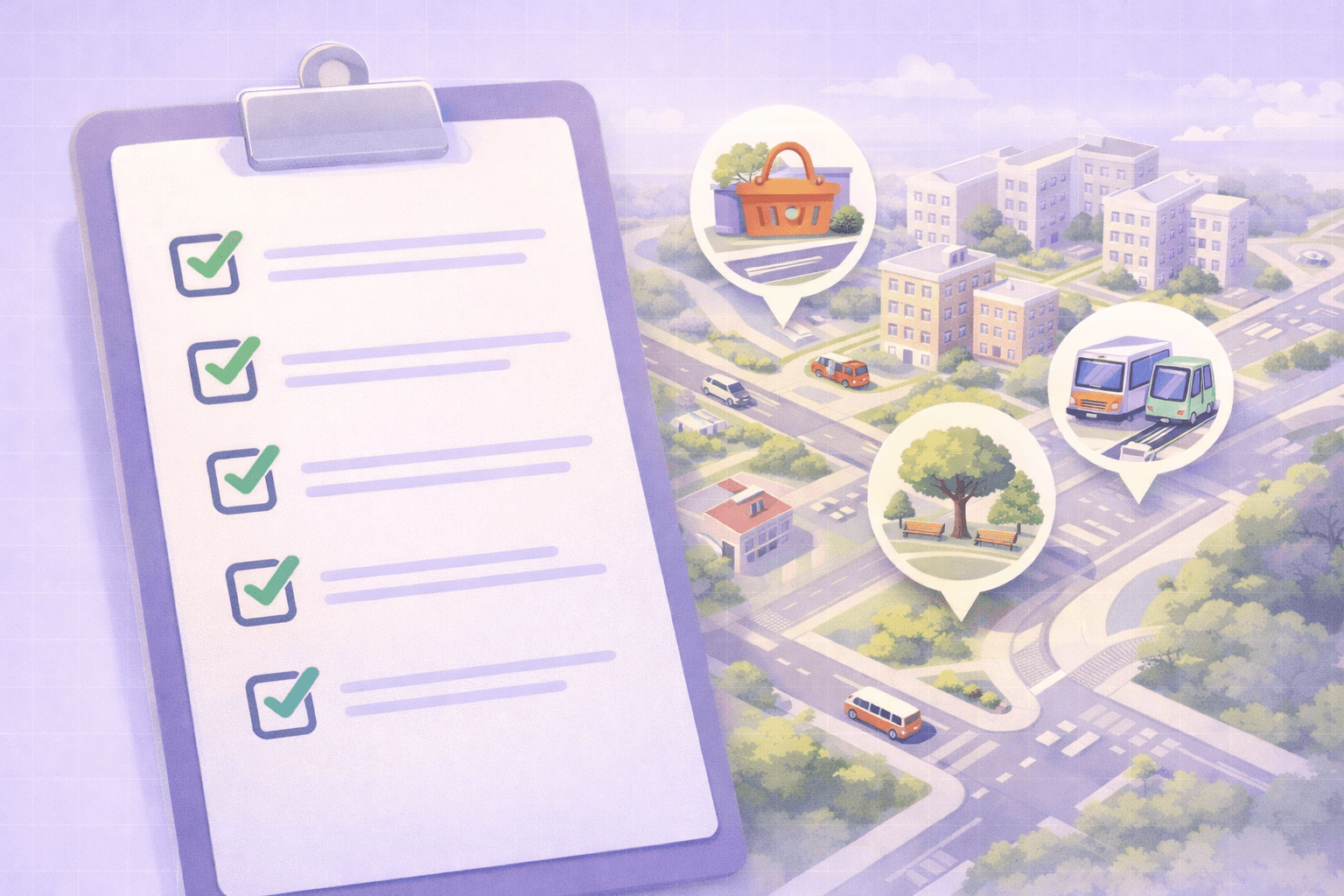
Check:
- supermarkets
- pharmacies
- pickup points
- schools and kindergartens
- basic services
What matters is not just their presence, but the real walking distance.
Sometimes “5 minutes on the map” turns into 15 because of fences, roads, and detours.
If infrastructure is missing, you will feel it every day.
And it’s almost impossible to compensate for.
Transport and Accessibility
Even a great apartment quickly becomes frustrating if you spend a lot of time commuting every day.
Check:
- nearby stops
- walking time to them
- transport frequency
- travel time to work / city center
It’s especially important to consider real routes, not just distance.
For example:
a child may attend a good school, but if the commute takes an hour — it significantly affects quality of life.
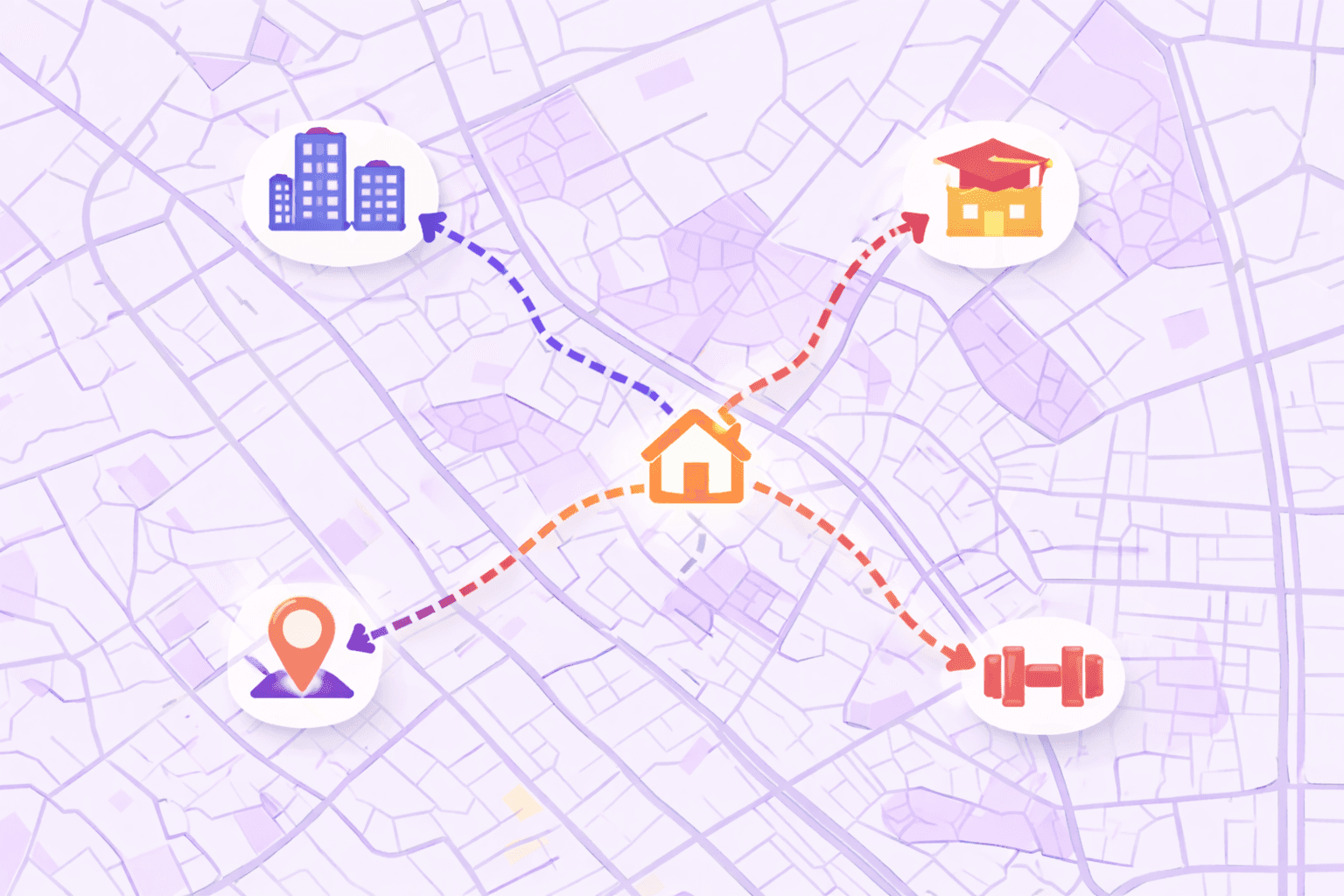
A good approach is to choose a location based on specific points:
- work
- school
- important places
Noise — Important but Partially Solvable
Neighborhood noise is one of the most common reasons for disappointment after purchase.
Main sources:
- roads
- trams and railways
- construction sites
- dense courtyards
The key difference is that noise is a partially solvable problem:
- high-quality windows
- sound insulation
But this requires additional cost and doesn’t always fully solve the issue.
That’s why noise should be considered, but not prioritized over factors that cannot be changed.
Green Areas and Surroundings
Green areas have a strong impact on how a neighborhood feels.
Pay attention to:
- nearby parks
- walkability
- building density
This affects:
- air quality
- comfort
- sense of space
Neighborhood Characteristics and Development Stage
Some areas feel “empty” because they are new.
In such cases, it’s important to understand:
- are you buying for “now”
- or expecting future development
Sometimes in 2–3 years the area becomes great.
Sometimes it doesn’t.
A Common Mistake
Viewing the apartment only once and only during the day.
In reality:
- morning — traffic
- evening — noise
- night — movement
If possible, visit at least twice.
Conclusion
A good neighborhood is not just something that “looks nice”.
It’s about:
- infrastructure
- transport accessibility
- overall comfort
The key principle:
👉 first check what cannot be changed
👉 then evaluate the rest
How to Make It Easier
Many of these factors can be checked in advance: infrastructure, transport, green areas, and even noise levels.
There are tools that allow you to evaluate a neighborhood holistically and compare different locations — making the decision much easier.