Why a Cheap Apartment Is Often an Expensive Mistake
Why a low apartment price often hides weak transport, noise, bad surroundings, and other problems that become costly later.

Why a Cheap Apartment Is Often an Expensive Mistake
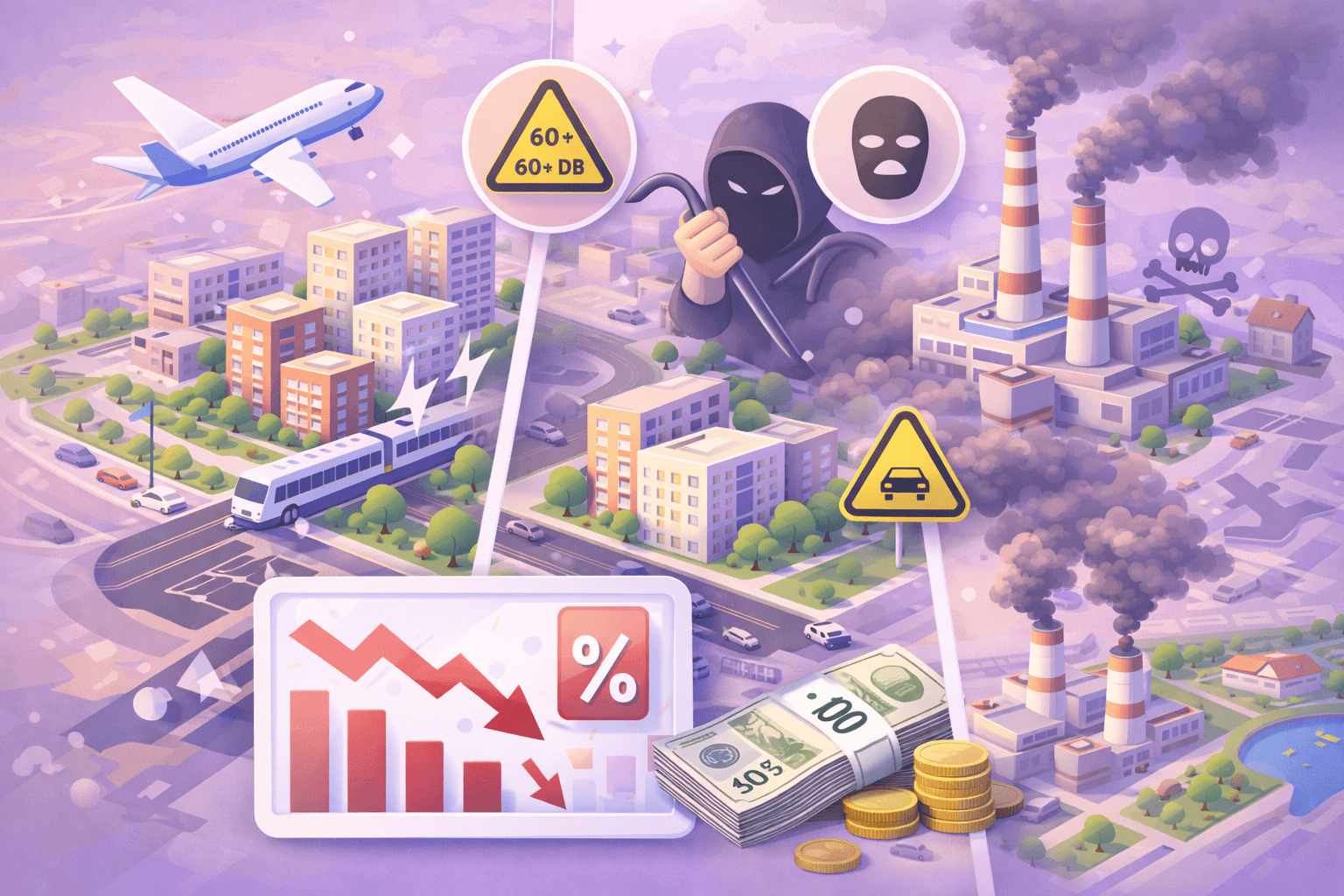
A low apartment price almost never appears out of nowhere. Very often, the market has already built local problems into that price: weak transport links, noise, a bad reputation, lack of greenery, or an inconvenient everyday environment.
At first, it feels like luck. It seems as if you simply found a better deal than everyone else. But in practice, what many buyers actually purchase is not a discount, but a bundle of compromises they will later pay for with money, time, stress, and quality of life.
Cheaper does not always mean better value
When someone sees a price below similar listings, the first reaction is usually simple: grab it before someone else does.
The problem is that the housing market rarely makes such a big pricing mistake for no reason. If an apartment is noticeably cheaper than comparable options, there is often a weakness somewhere. And very often that weakness is not inside the apartment, but around it.
You can renovate the interior. You can replace the kitchen. You can repaint the walls. But if the neighborhood itself is inconvenient, noisy, or simply weak as a place to live, that becomes a much more expensive problem.
Transport: a cheap apartment can mean an expensive daily commute
One of the clearest examples is transport.
In Poland, this is especially visible in Warsaw. Research on the first metro line showed that the strongest price premium appears for apartments located within 400–800 meters of a station. That factor added roughly 8–13% to the price.
This leads to a simple conclusion. If an apartment is cheaper but poorly connected to the city, that is probably not an accident. The market has already priced in the fact that living there is less convenient and that selling it later may be harder.
In other words, you may save money once at the moment of purchase, but then keep paying for the location with your time every day.
Greenery: good surroundings also show up in the price
The same logic applies to green space.
In Warsaw, having a green area within 100 meters of an apartment was associated with a price premium of around 2.8–3.1%. That means meaningful greenery is something the market values, not just something that looks nice on a map.
So when an apartment is noticeably cheaper than similar alternatives, it is often not because the seller is simply in a hurry. More often, it is because the surrounding environment is objectively weaker. And that difference is very hard to fix later with renovation, furniture, or better listing photos.
A strong discount often means a strong problem
There are also harsher factors that the market penalizes very heavily.
One of the clearest examples is proximity to an airport and its noise zone. A Polish study on Gdańsk and Warsaw found that housing in airport impact zones was noticeably cheaper. In Gdańsk, the model suggested a discount of around 12%, and in Warsaw around 29%, although the authors themselves warned that the Warsaw estimate should be treated more cautiously.
Even with that warning, the general conclusion remains strong. If a property is much cheaper than the market and is located in a noisy, conflict-heavy area, that is no longer just a “good deal.” It is more likely an asset with a built-in disadvantage.
Safety: a weak neighborhood is not always obvious during a viewing
Another major factor is safety.
Research from Szczecin showed a strong relationship between neighborhood crime levels and housing prices. This is exactly the kind of issue that is hard to read from one short visit. During the day, an area may seem normal, clean, and even pleasant.
But if it has a weak reputation and a difficult crime background, the market usually still accounts for that. In that case, the apartment is cheap not because you got lucky, but because the neighborhood is not attractive to future buyers either.
Sometimes the market has not even fully priced in the risk yet
There is an even more uncomfortable scenario.
Sometimes an apartment is cheap, but the market has not even fully accounted for all the real problems yet. A good example is air quality. In one Warsaw study, the authors did not find a statistically significant effect of PM10, PM2.5, and PM1 on transaction prices, even though they expected pollution to reduce housing value.
That is an important signal. Poor air quality can genuinely make life worse even if the market is not yet offering a large enough discount for it.
So “cheap” does not always mean the risk is honestly reflected in the price. Sometimes it simply means you are buying a problem that many people still underestimate.
Why a cheap apartment often becomes expensive later
A buying mistake rarely looks like one giant disaster from day one. More often, it turns into a chain of small frustrations that repeat every day.
It is the long commute. The evening noise. The weak infrastructure. The unpleasant feeling about the area. The difficulty of reselling later. The realization that the apartment itself may be fine, but living around it is not.
Over time, the initial saving starts to disappear. Sometimes in direct costs. Sometimes in lost time. Sometimes in lower quality of life. And often in all three at once.
The question to ask instead of “why is it so cheap?”
When an apartment is much cheaper than the market, the best question is not “how did I get so lucky?” but “what exactly is the market discounting here?”
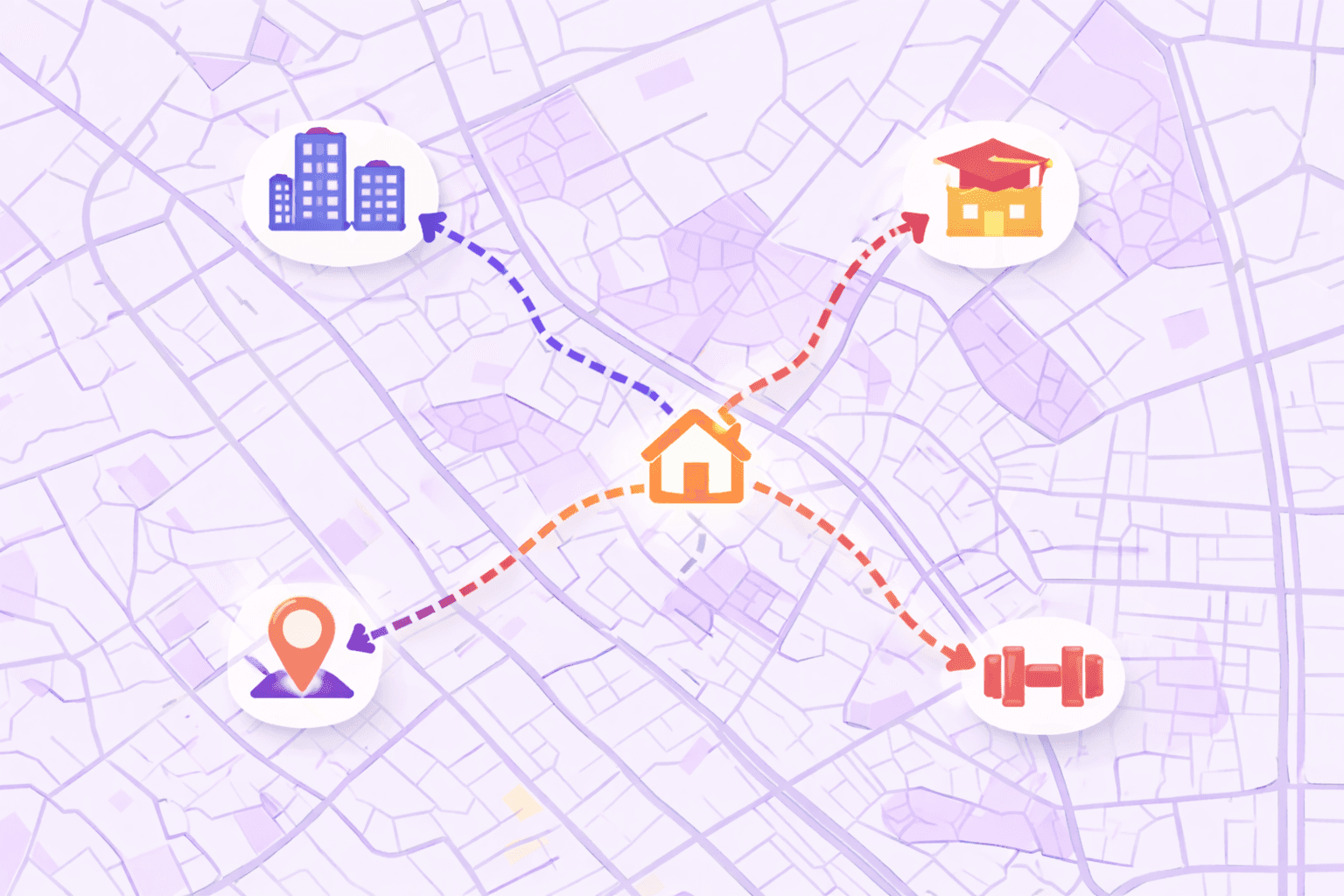
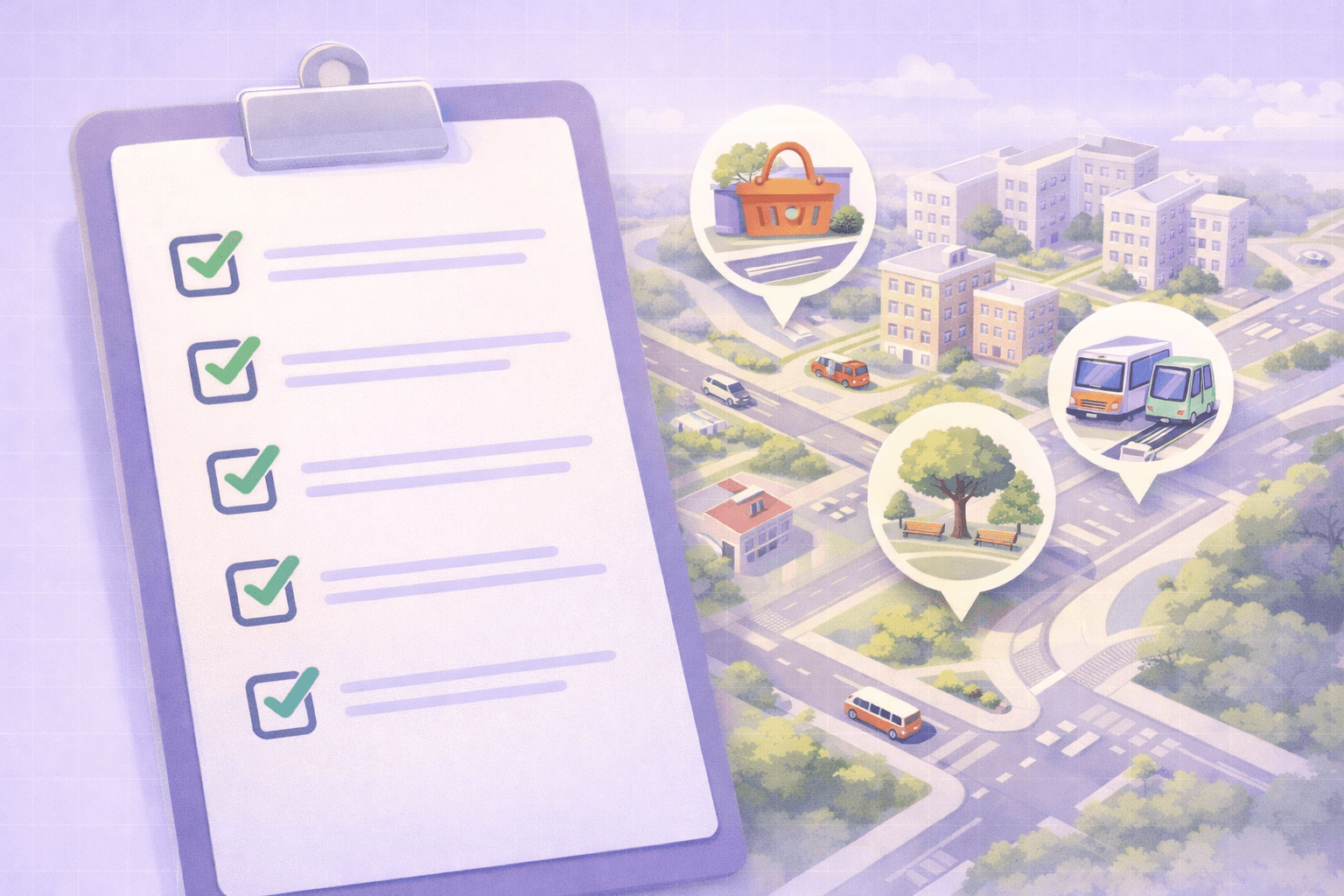
You need to look not only at the property itself, but at the environment around it:
- how easy it is to get around from here;
- whether there is real greenery nearby;
- what the noise situation looks like;
- how safe the area really is;
- how convenient daily life is;
- whether there are factors that make the neighborhood weak in the long run.
That way of thinking helps separate a real opportunity from a future mistake.
The main takeaway
A cheap apartment is not always a chance to buy well. Very often, it is an invitation to understand why the market has already lowered the price.
If the reason is a weak neighborhood, noise, poor transport, crime, or an inconvenient living environment, the initial saving can easily turn into an expensive mistake. You can upgrade an apartment. You cannot upgrade the neighborhood.