Why the green index matters when choosing a neighborhood
How green areas, water, and natural environment affect quality of life — and why you should evaluate them before buying a home.
Why the green index matters when choosing a neighborhood
Buying an apartment is not just about size or condition. What matters more is the environment you live in every day.
One of the most underestimated factors is the amount of greenery around.
The problem is — you don’t notice its absence immediately.
But after a few months, you start to feel it.
What “green environment” actually means
Greenery is not just a park nearby.
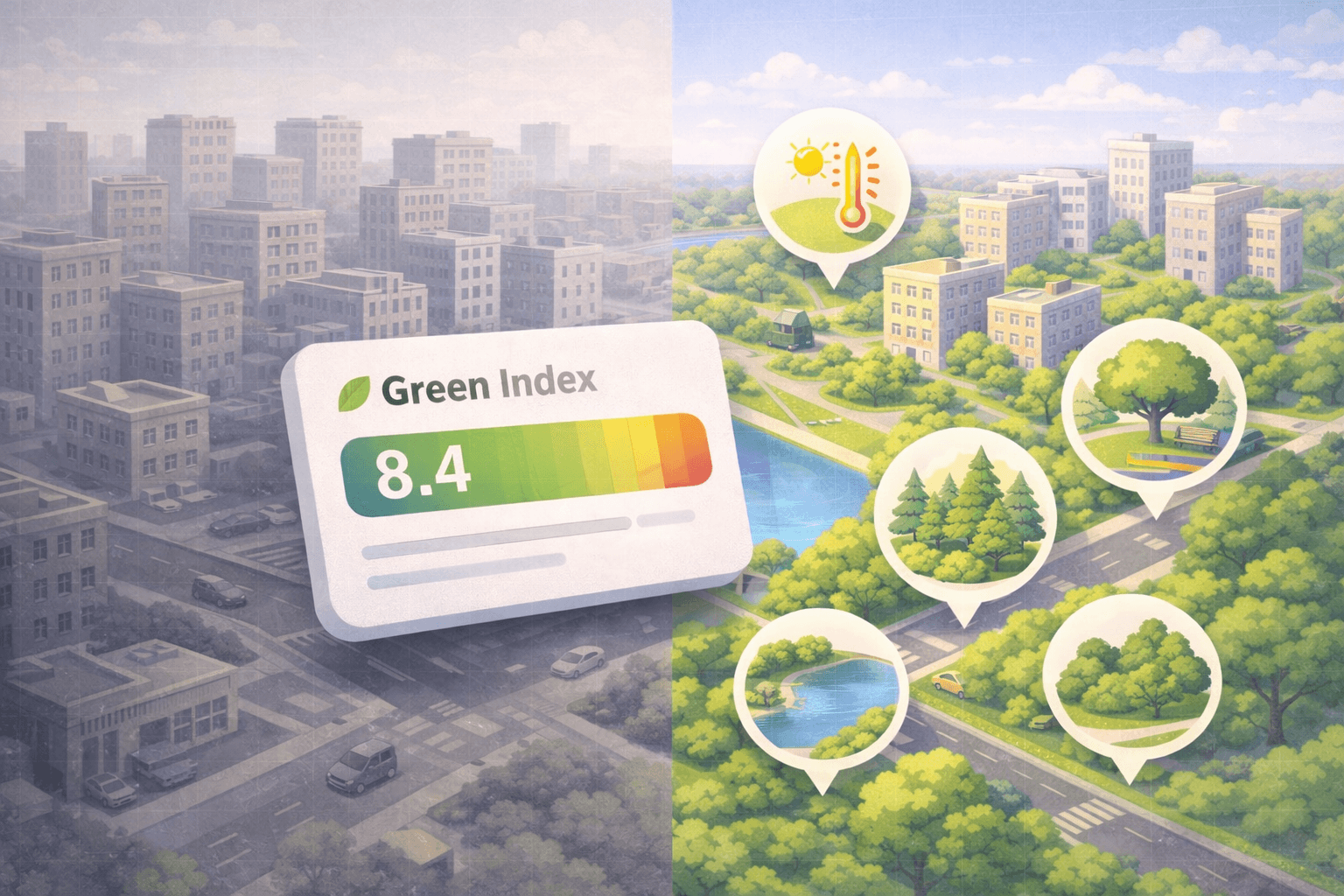
The index considers multiple types of natural environment:
- parks
- forests and large green areas
- open grasslands
- shrubs and residential greenery
- water bodies (rivers, lakes, ponds)
Each of them affects your experience differently.
For example:
- nearby park = regular walks
- forest = silence and separation from the city
- water = better microclimate and visual comfort
How it looks in reality
It’s not just about presence, but distribution around a specific point.
You can live:
- in a “green pocket”
- or in a fully concrete area
Why it affects your life
Green environment directly impacts how you feel:
- lower stress
- better recovery
- more willingness to go outside
Lack of greenery means:
- noise
- overheating in summer
- dust
- visual pressure
Water — an overlooked factor
Water nearby is often ignored, but it matters.
It provides:
- cooling
- fresher air
- open visual space
- places to walk
Why distance and size matter
A common mistake is thinking:
“There is a park somewhere nearby”
What really matters:
- how close it is
- how large it is
- how many green areas are around
A small park 200 meters away and a large park 2 km away create completely different lifestyles.
How the green index works
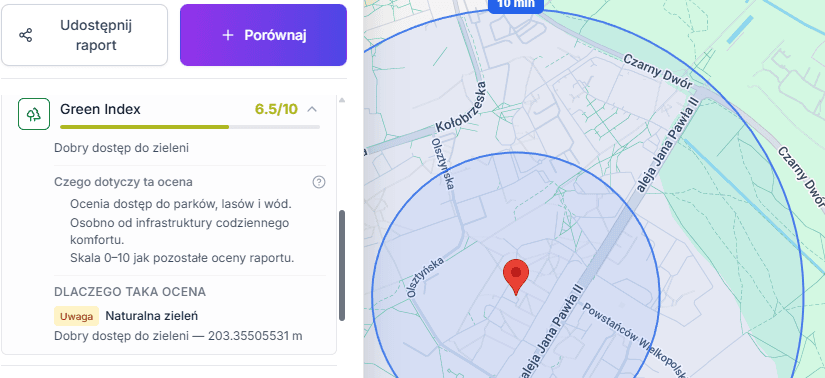
The green index translates environment into a measurable score.
It considers:
- distance
- area size
- number of green zones
- presence of water
In the end, you get a clear answer:
how comfortable the environment actually is.
Conclusion
You can change an apartment.
You cannot change the neighborhood.
That’s why it’s important to evaluate it before buying —
not after you move in.